IRS Form 1096: Annual Summary of Information Returns Explained
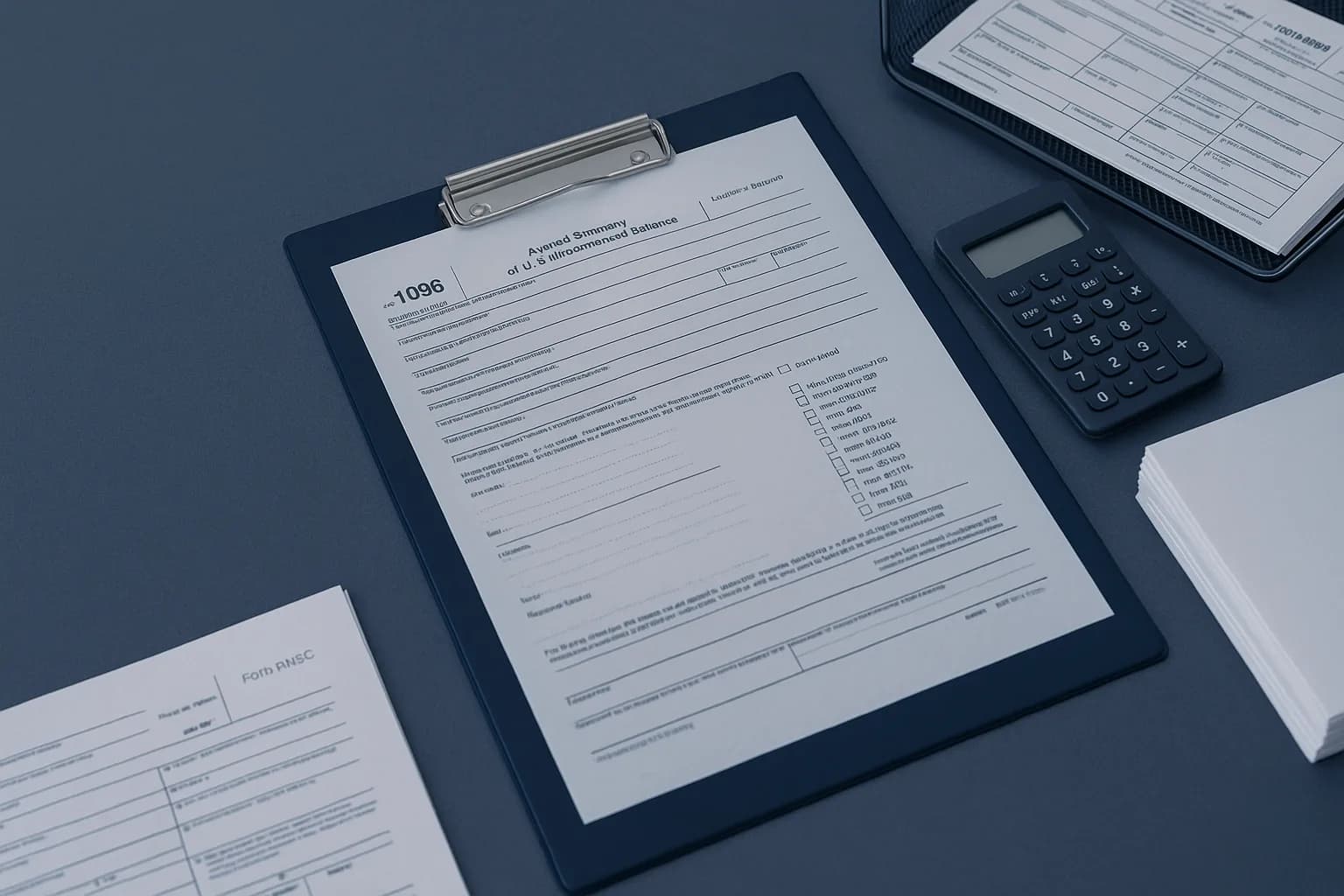
Form 1096 is the control sheet for paper information returns
File it correctly once, and your 1099 paper submission process gets much simpler
IRS Form 1096 is the paper transmittal form that summarizes a batch of information returns, such as Forms 1099, when you are mailing those returns to the IRS. If you are searching for a clear form 1096 annual summary guide, this page walks through exactly who files it, how to complete each box, and how to avoid common filing errors.
Many businesses still search for terms like irs form 1096 for 2022, 2021 form 1096, or form 1096 for 2022. Those prior-year references are useful for historical corrections, but for active filing, you should always use the current IRS revision and current filing instructions.
At a glance
- Form 1096 is only for paper filing of certain information returns.
- If you must e-file, you do not mail Form 1096 with electronic submissions.
- You file a separate 1096 for each return type (for example, one for 1099-NEC and one for 1099-MISC).
- Deadlines vary by form type, and extension requests use Form 8809.
- Using the wrong form version, wrong totals, or wrong TIN can trigger delays and penalties.
Jump to section
What Is Form 1096?
Form 1096 is the IRS cover sheet for paper information returns. Its official name is Annual Summary and Transmittal of U.S. Information Returns, which is why you also see it called a 1096 annual summary or 1096 summary form.
In plain terms, it tells the IRS who is filing, what type of information return is enclosed, how many forms are in the package, and what dollar totals should be expected from that group. You use it when mailing paper returns such as Form 1099 series, 1098, 3921, 3922, 5498, and W-2G.
If you are looking for the official irs form 1096 or the current irs form 1096 pdf, use IRS forms pages directly. Do not rely on random third-party copies of this document for filing.
Who Needs to File Form 1096?
You generally file Form 1096 if you are submitting eligible information returns on paper. Any person or business mailing those forms to the IRS should include one 1096 transmittal per form type.
You usually do not file Form 1096 when:
- You are filing those returns electronically through IRIS, FIRE, or another approved e-file channel.
- You are required to e-file because you meet the IRS electronic filing threshold.
- You are filing a return type outside the Form 1096 transmittal categories.
Pro Tip
IRS guidance for filing years beginning in 2024 and later applies a 10-return aggregate threshold for many information returns. If you must e-file, do not also mail the same returns with Form 1096.
How to Fill Out Form 1096 Line by Line
The fastest way to avoid rejections is to follow the irs form 1096 instructions box by box. Below is a practical walkthrough you can use before you seal your paper filing.
- Filer identity area: Enter your legal filer name, address, contact person, phone, and email exactly as used on the enclosed information returns.
- Box 1 or Box 2: Enter your TIN in one box only. Most business filers use EIN in Box 1. Individuals not in a trade or business generally use SSN in Box 2.
- Box 3: Enter the total number of forms transmitted with this 1096. Count completed returns only, not blank pages, voids, or the 1096 itself.
- Box 4: Enter total federal income tax withheld from the forms in that batch.
- Box 5: Enter total amount reported for the specific box references listed in the instructions for your return type.
- Box 6: Check only one form type. If you are mailing multiple form types, prepare separate 1096 transmittals.
- Signature block: Sign and date under penalties of perjury before mailing.
Did You Know?
The IRS says a printable irs form 1096 downloaded from its website is for informational use and is generally not scannable for filing. Order official scannable forms for paper submission.
Filing Deadlines and Form 1096 Extension Options
Deadlines depend on the information return type in your package. For the 2025 instructions cycle (returns filed in 2026), IRS guidance lists January 31 filings for paper 1099-NEC batches, February 28 for many other paper information returns, and May 31 for paper Form 5498 groups, adjusted for weekends and legal holidays.
If you need a form 1096 extension, extension requests are handled through Form 8809. In many cases you can get a 30-day extension if the request is timely. Special rules apply to Forms W-2 and 1099-NEC, where automatic extension treatment differs.
The most important operational point is timing: file extension requests by the original due date of the return set, not after.
Important
Do not assume all information returns share the same due date. A one-day mistake can turn a clean package into a late filing.
Generate Tax Return Summaries in Seconds
Upload any 1040, 1120, or 1065 and get a professional, client-ready analysis powered by AI.
Try It FreeCommon Form 1096 Mistakes to Avoid
Most rework on paper information returns comes from a short list of preventable mistakes. Catch these before mailing:
- Using a mismatched filer name and TIN compared with the enclosed forms.
- Combining different form types under one 1096 instead of using separate transmittals.
- Incorrect Box 3 counts, especially when handling corrected or void forms.
- Misstating Box 5 totals because source form box mappings were skipped.
- Mailing non-scannable downloaded forms instead of official filing copies.
- Sending the package to the wrong IRS address for your state.
Add a final two-person review for totals and TIN matching if your office handles large year-end batches. Ten minutes of review can save hours of correction work.
Penalty reminder
IRS instructions note that if you are required to e-file but submit paper returns without an approved waiver, penalties may apply. Penalty amounts can change by filing year, so check the current instructions before filing.
How Form 1096 Relates to 1099s
Think of Form 1096 as the control sheet and the 1099 forms as the detailed records. The 1096 does not replace individual 1099 filings. It summarizes each paper batch and helps the IRS process that package correctly.
A clean process usually looks like this:
- Group returns by form type (for example, all 1099-NEC together).
- Complete one Form 1096 for each group.
- Verify counts and dollar totals against the actual forms in that group.
- Mail to the IRS address for your filing location.
This is also why terms like irs 1099 summary form often point back to Form 1096 in practice.
Why People Search “IRS Form 1096 2021” or “IRS Form 1096 for 2022”
Search traffic often includes phrases like irs form 1096 2021, irs form 1096 for 2022, and 2021 form 1096. Usually, those users are handling amended filings, prior-year cleanups, or records requests.
For active filing, do not assume an older revision still applies. Use the current IRS form revision and filing instructions for the year you are filing. If you need a prior-year form for a correction, pull it from the IRS prior revisions page so you use the correct version intentionally.
This simple check eliminates a surprisingly large share of rejected paper packages.
Final Checklist and Next Steps
- Use the current official Form 1096 and current-year instructions.
- Confirm you are paper-filing and not required to e-file.
- Prepare one Form 1096 per return type and verify totals carefully.
- Check due dates and submit Form 8809 on time if an extension is needed.
If you want a broader context on how tax summaries work beyond information return filings, read our tax return summary guide.
Need to summarize client tax returns in plain language after filing season? Magnus Tax helps firms generate professional summaries quickly, with a light review workflow before sending to clients.